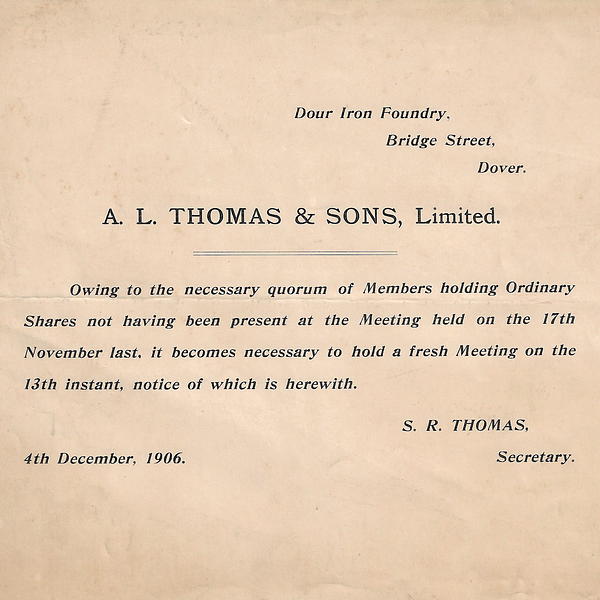
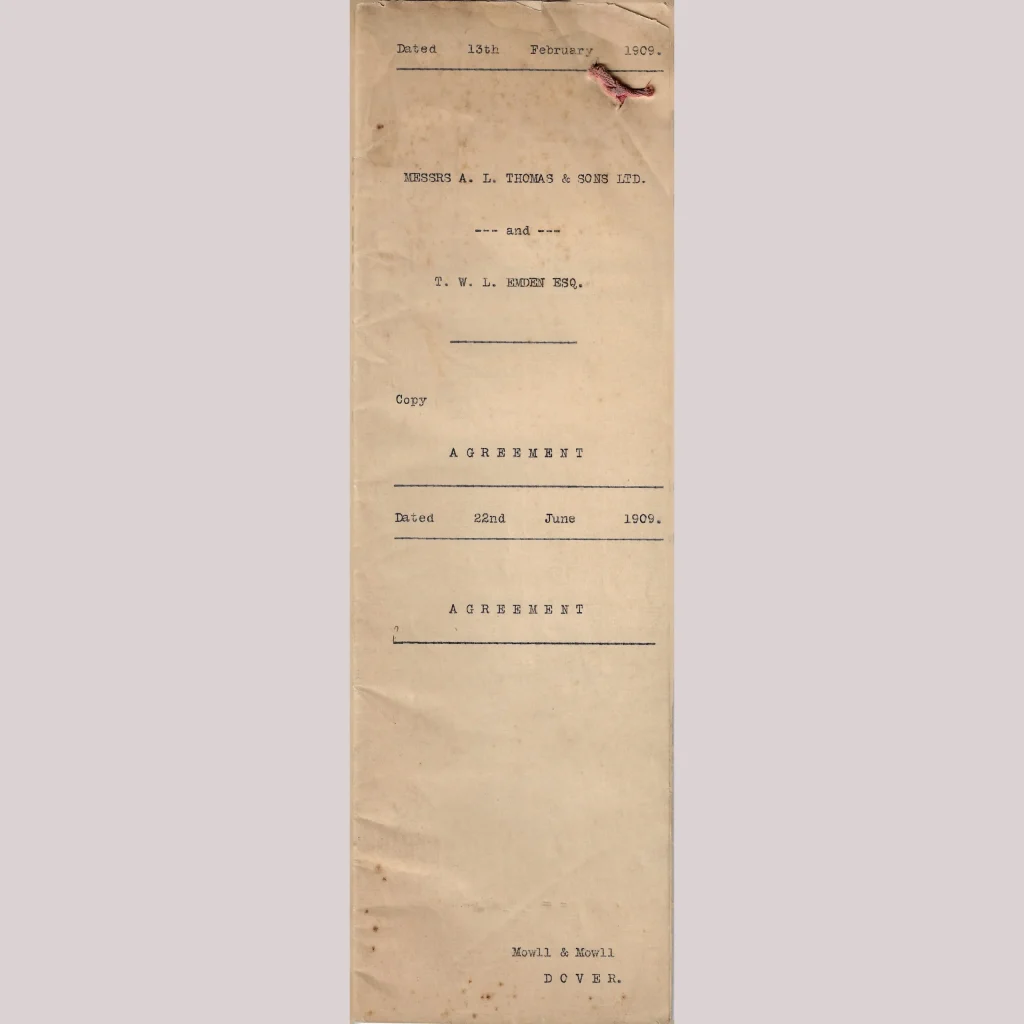
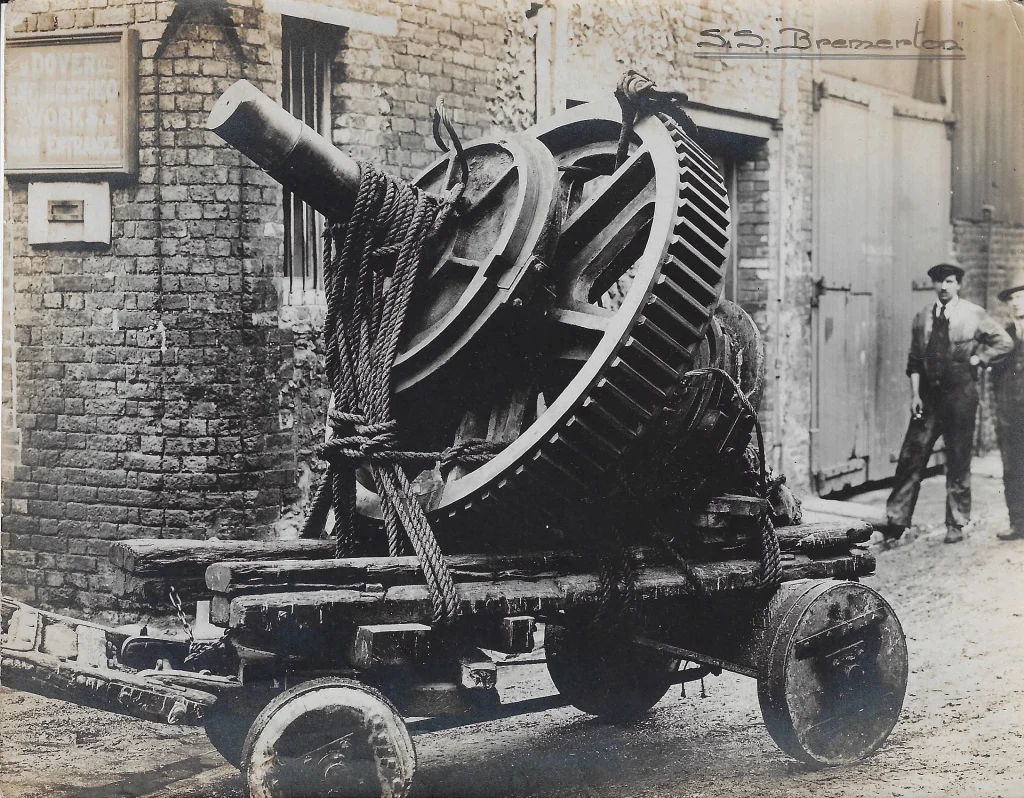
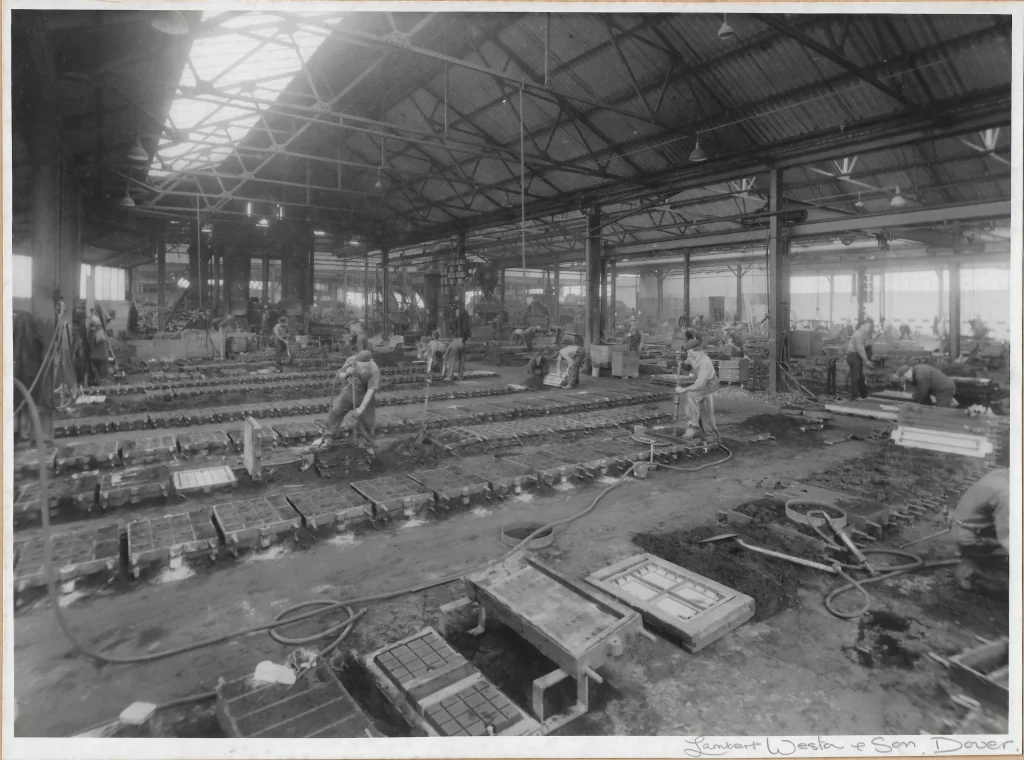
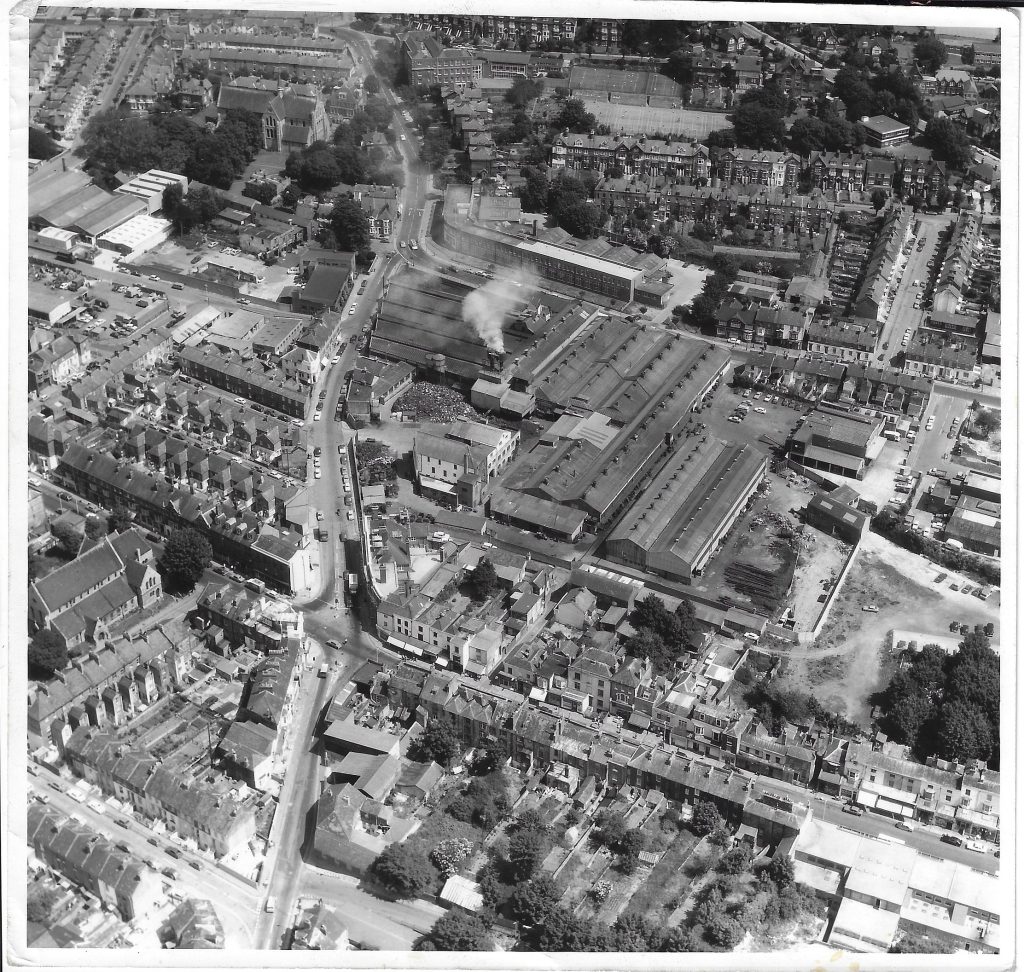
Walter Emden, Mayor of Dover, acquired a controlling interest and installed his nephew Vivian Elkington as manager. The company was renamed Dover Engineering Works Ltd, signalling a move from local foundry to national engineering supplier.
During World War I, Dover Engineering Works was responsible for maintaining and supporting the 200‑strong Dover Patrol fleet, a Royal Navy force tasked with preventing German submarines entering the English Channel.
The company’s foundry and workforce became an integral part of Britain’s naval war effort, keeping ships operational in one of the most heavily contested maritime zones of the war.
On 3 July 1940, with Dover designated a frontline town, the government ordered full evacuation of the factory within 48 hours.
In a remarkable logistical feat, all machinery, tools, moulds and workers (with families) were relocated to Watford, leaving only the structure for demolition if invasion occurred.
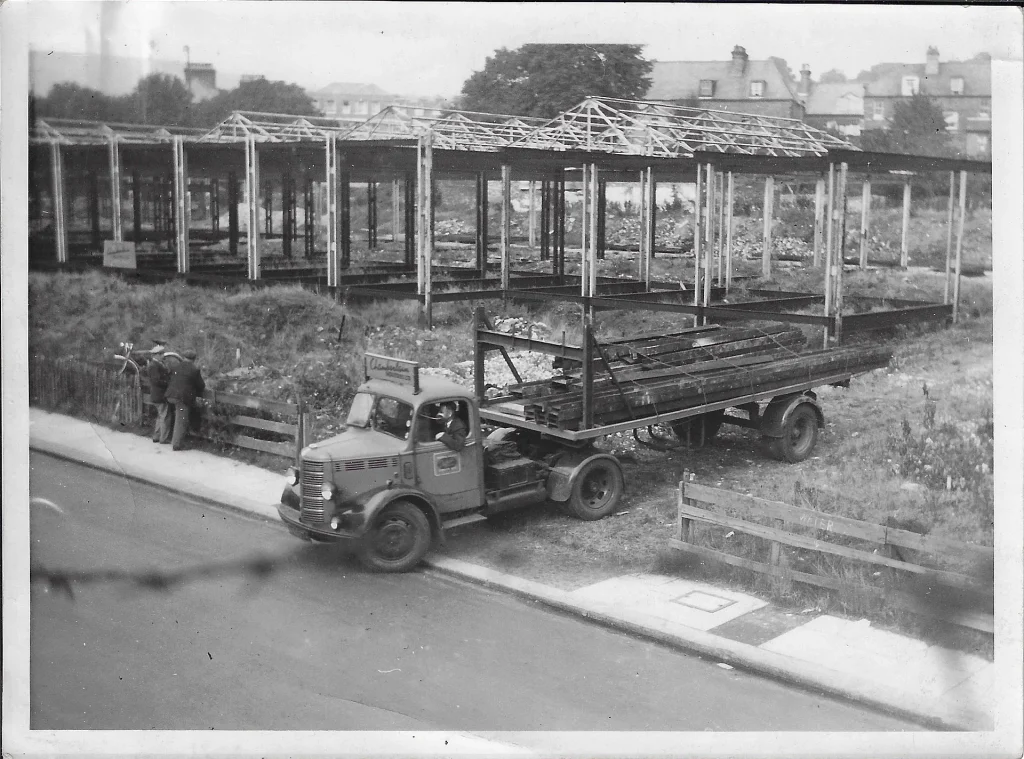
Permission to rebuild at Charlton Green was granted in July 1945. The works reopened with fewer than 20 staff; many former employees having settled permanently in Watford after their homes were destroyed during the war.
A Foundry Trade Journal feature (reprinted in the Dover Express, 26 March 1948) praised Dover Engineering Works as a high‑precision, mechanised foundry. By this time, Gatic covers were being exported to Persia, East Africa and West Africa.
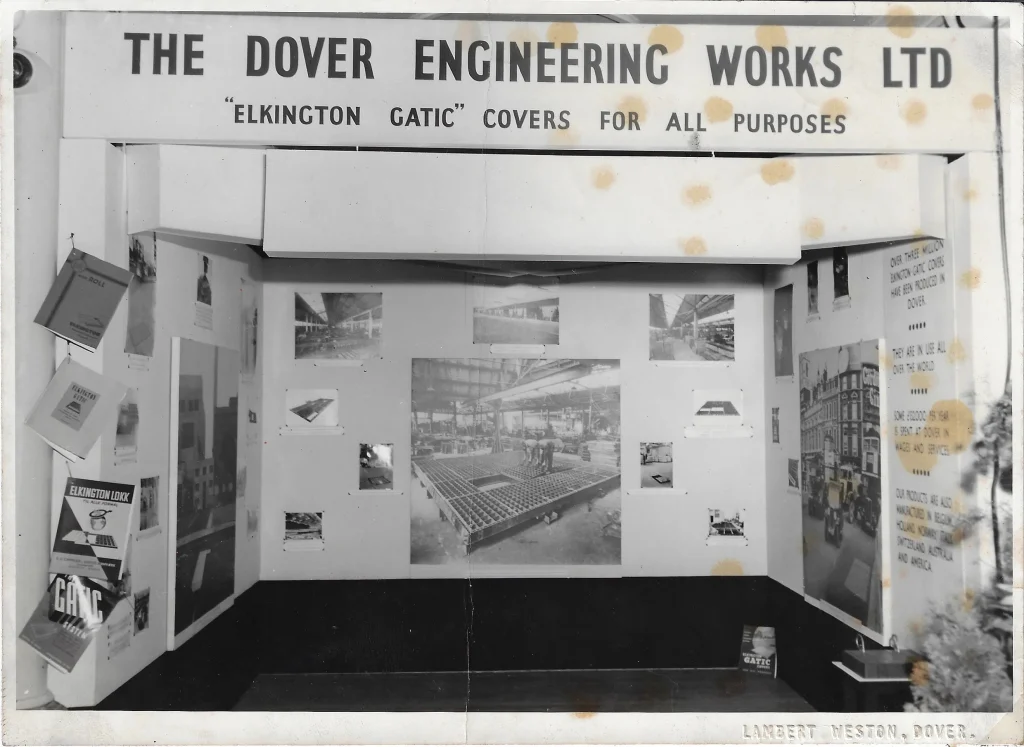
The Dover Engineering Works Ltd showcased its Elkington Gatic range at the 1954 Dover Trade Fair. The stand highlighted heavyduty steel covers and frames designed for roads, yards, factories, docks, and other industrial and municipal environments. Photographic panels and product displays emphasised largescale manufacturing capability at the Dover works, alongside the durability and versatility of Gatic systems, reflecting the company’s growing postwar prominence in British engineering and infrastructure supply.
Elkington Gatic exhibited at the 1958 Public Works and Municipal Services Exhibition and Congress, presenting its products to local authority engineers and public sector decisionmakers. The exhibition stand featured a wide range of access covers, frames, and drainage solutions in operational layouts, with supporting imagery showing realworld municipal applications. This appearance reinforced Elkington Gatic’s role as a key supplier to public works, aligning the brand with the rapid modernisation of urban infrastructure in the late 1950s.
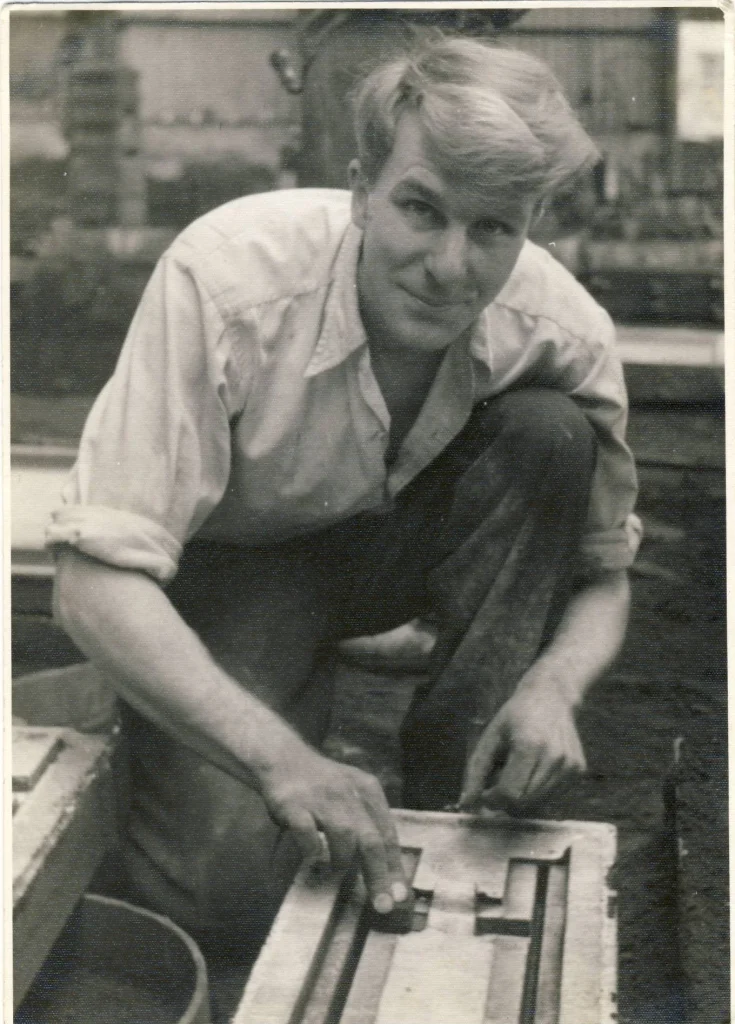
Brian Woodland, affectionately known as “Speedy” by colleagues, a nickname earned from his motorbike exploits when he began his 36‑year career at Dover Engineering Works, was also an enthusiastic videographer outside of work. In the early 1960s, Brian brought his camera into the works and filmed a remarkable “day in the life” of Dover Engineering Works. We are sincerely grateful to the Woodland family for their generous permission to share and preserve this important piece of our history.
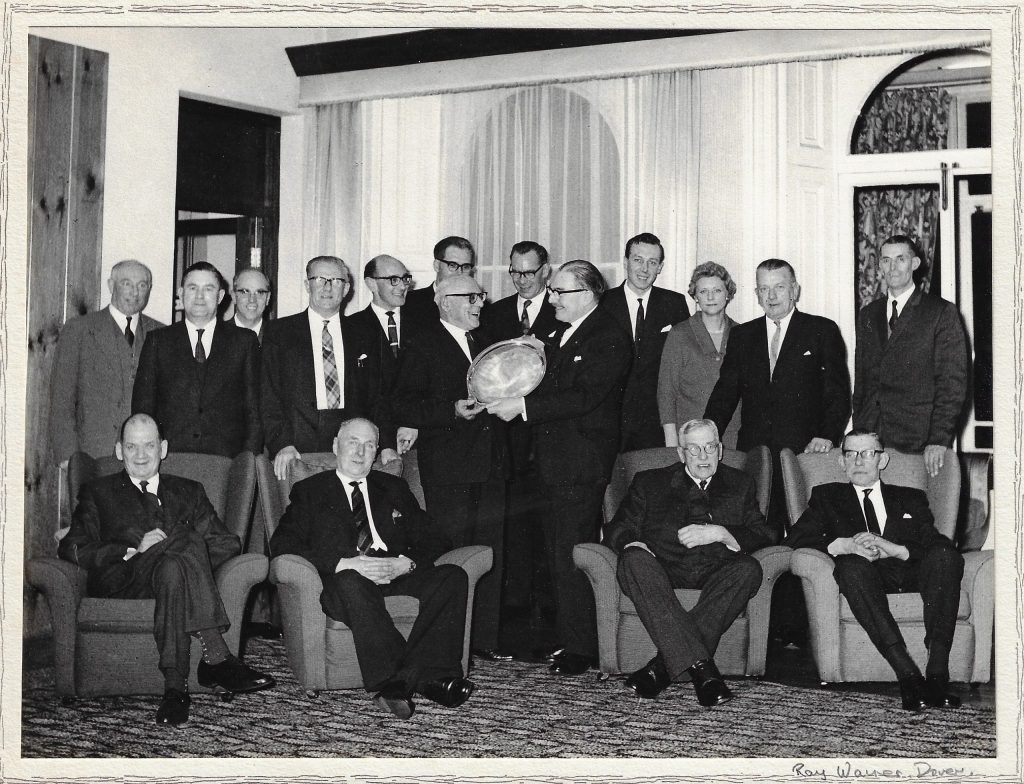
Souvenir photograph taken on 15 December 1965, showing 17 members of staff from Dover Engineering Works Limited. The photograph was taken at a dinner held to mark the retirement of Mr H. G. Barling from executive duties after 54 years of service with the company. Each member of staff pictured had more than 15 years’ service, with the longest‑serving member having completed 60 years.
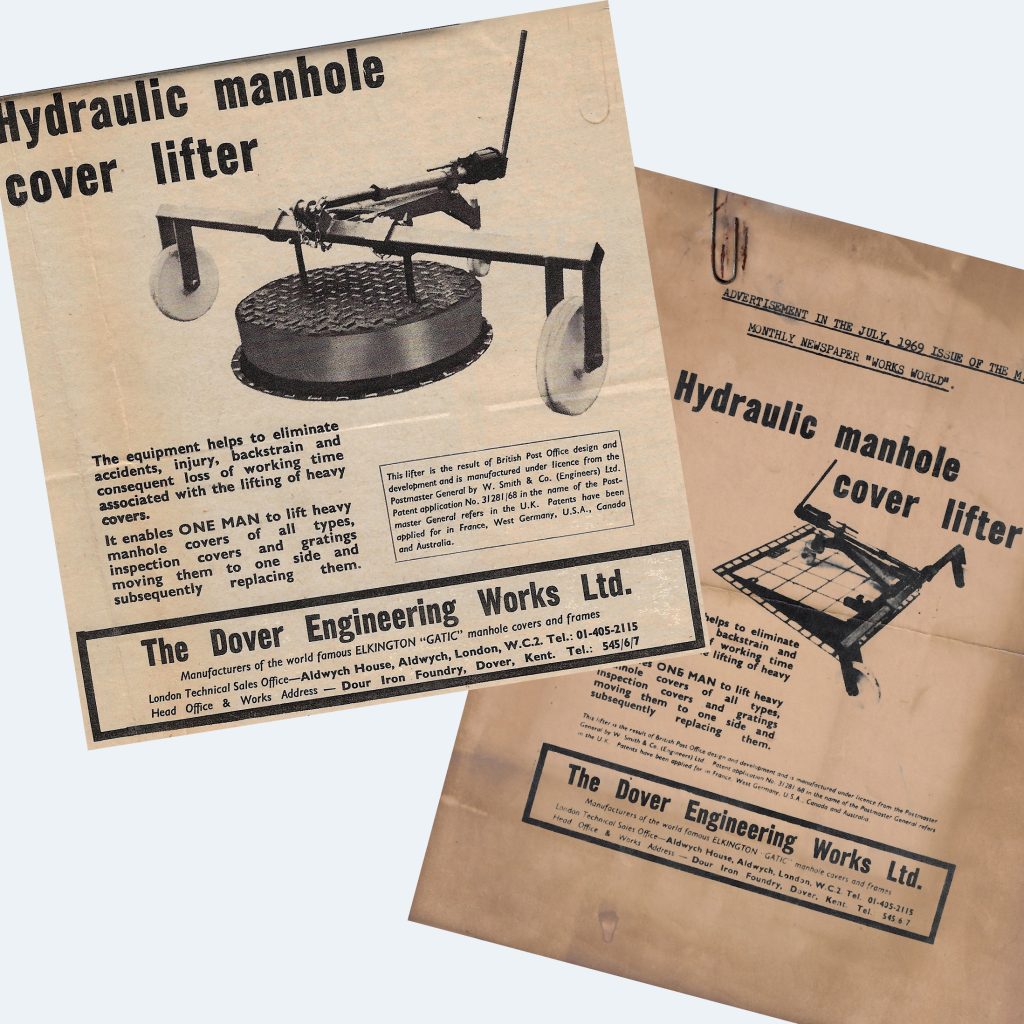
In 1969, Dover Engineering Works Ltd became the first company to invent and produce dedicated cover‑lifting equipment, introducing the hydraulic manhole cover lifter. Contemporary trade articles highlighted its ability to enable one‑person operation, reducing accidents, back strain, and lost working time associated with lifting heavy covers and gratings. This invention marked a major step forward in access‑cover safety and handling and paved the way for the development of today’s Assist Lift range of covers, which continues to build on these original principles.
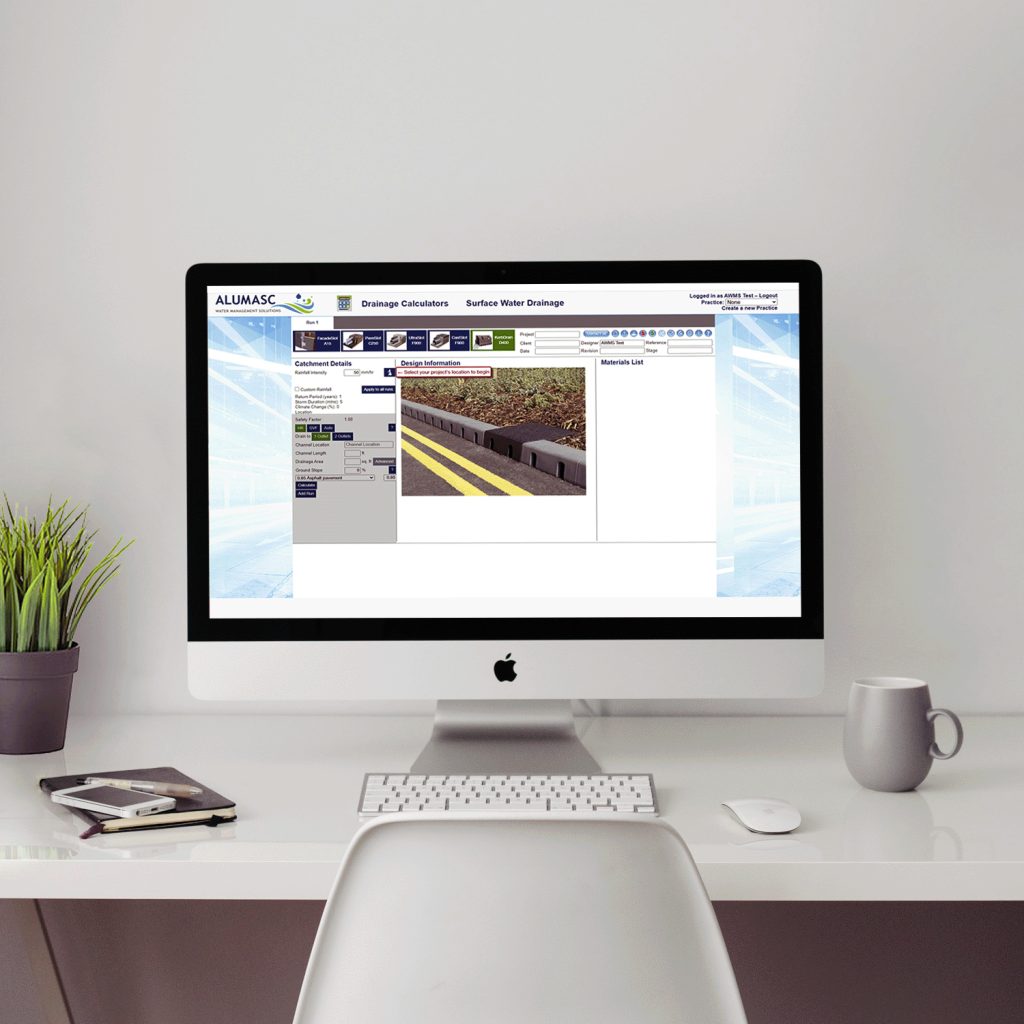
Alumasc pioneered an industry-first drainage calculator that integrates Gatic Slotdrain, enabling designers to accurately size and specify high-performance drainage solutions with unprecedented speed and confidence.
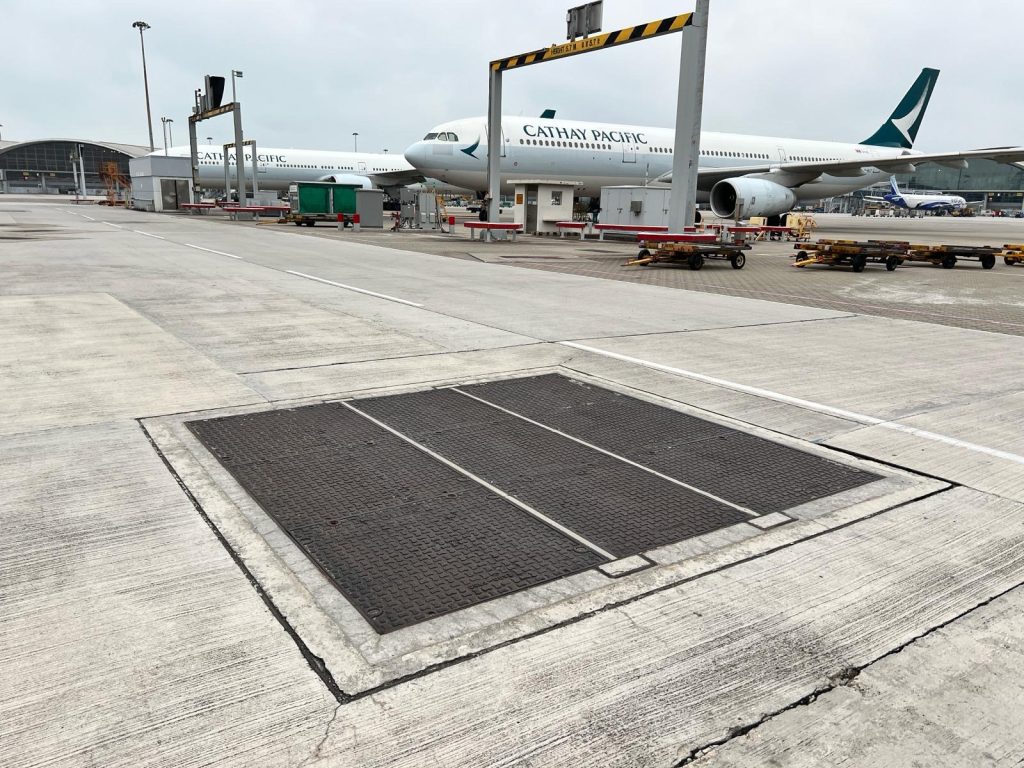
Gatic, as part of Alumasc’s Water Management division, secured over £3.5m of new contracts across the Middle East and Far East, including:
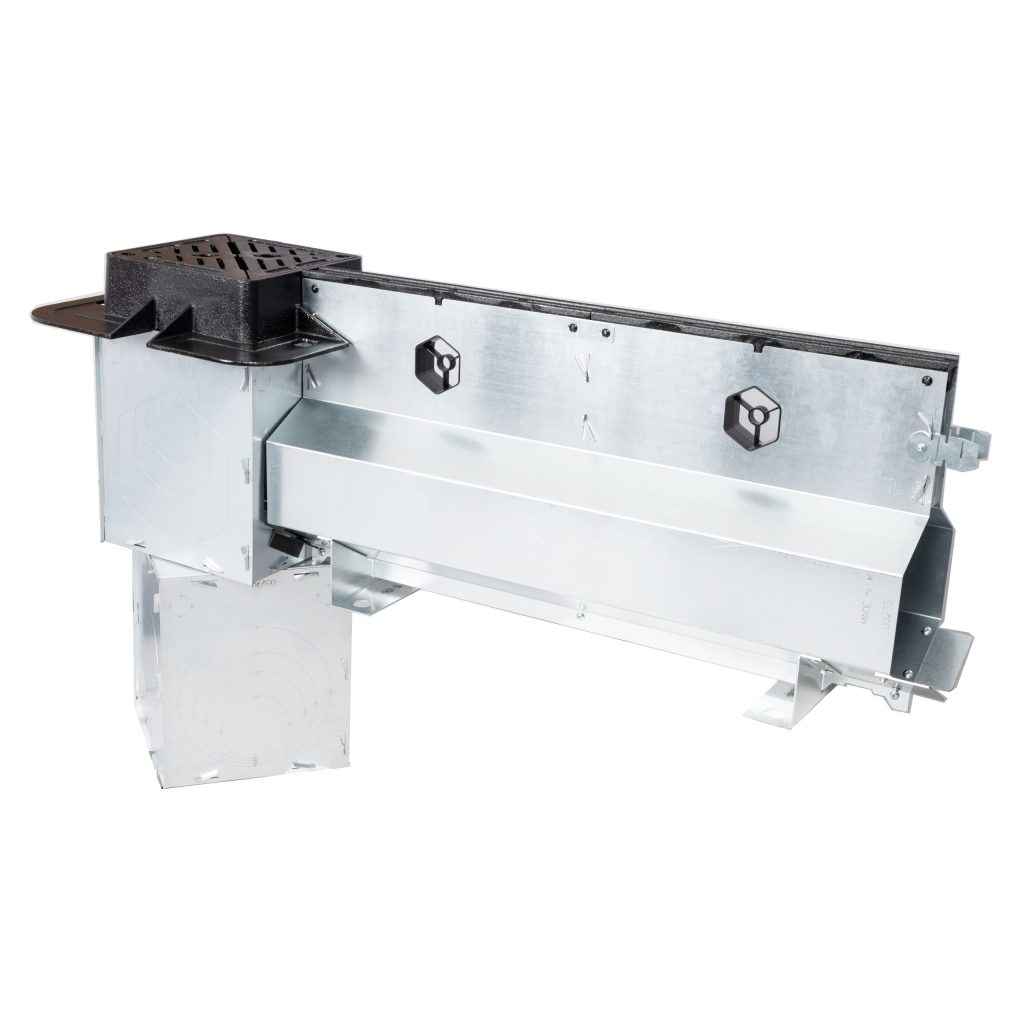
Gatic develops and introduces the RotoBox, a modular access and drainage box featuring an innovative rotating body design. The rotating configuration allows installers to adjust outlet orientation on site without additional components, reducing the need for bespoke fabrication. This design innovation cuts material usage, minimises waste, and lowers installation time and cost, delivering both sustainability and efficiency benefits for contractors and asset owners.
Historic Transfer of Gatic Manufacturing
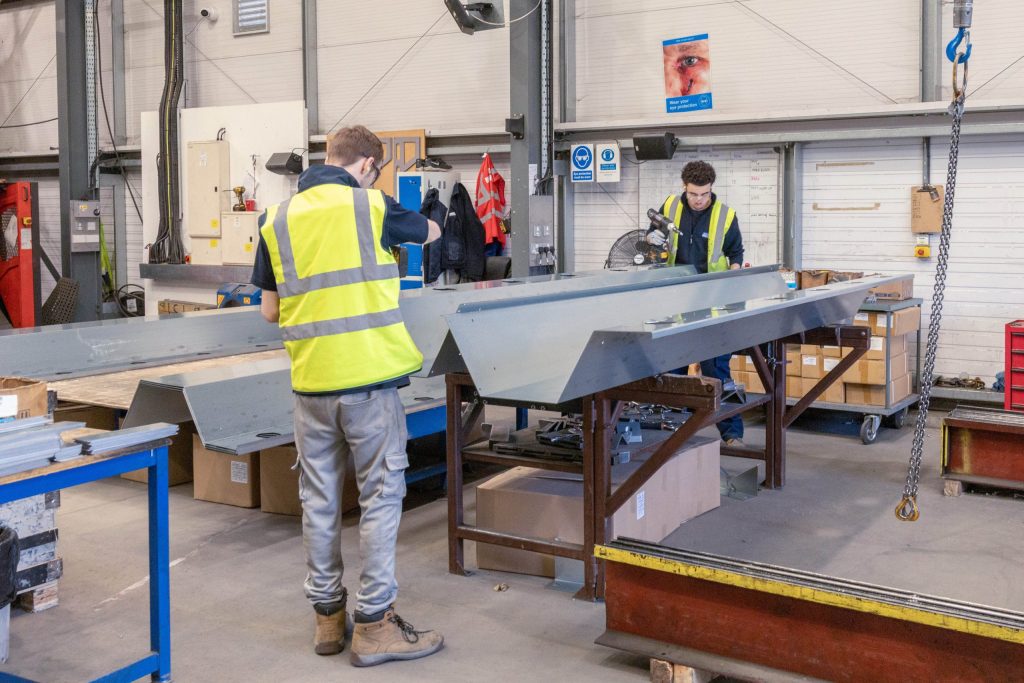
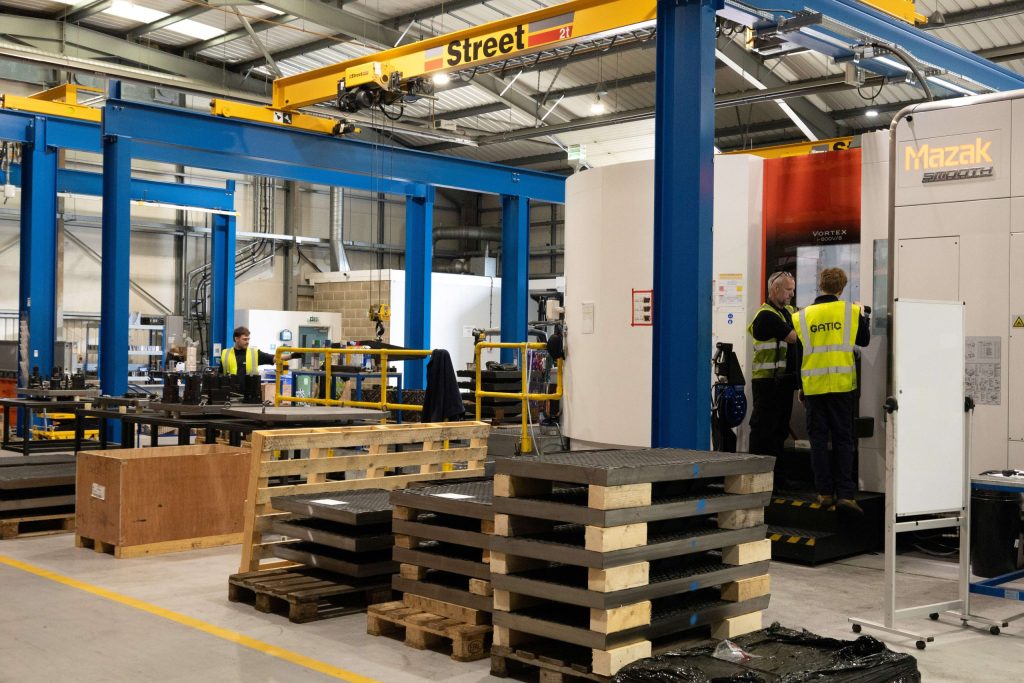
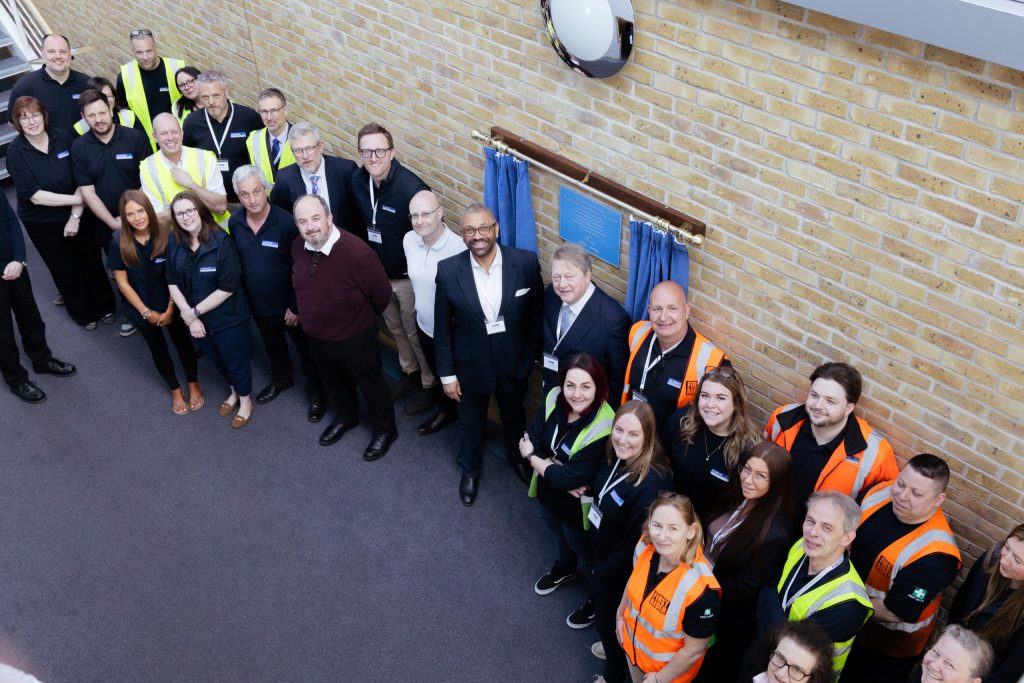
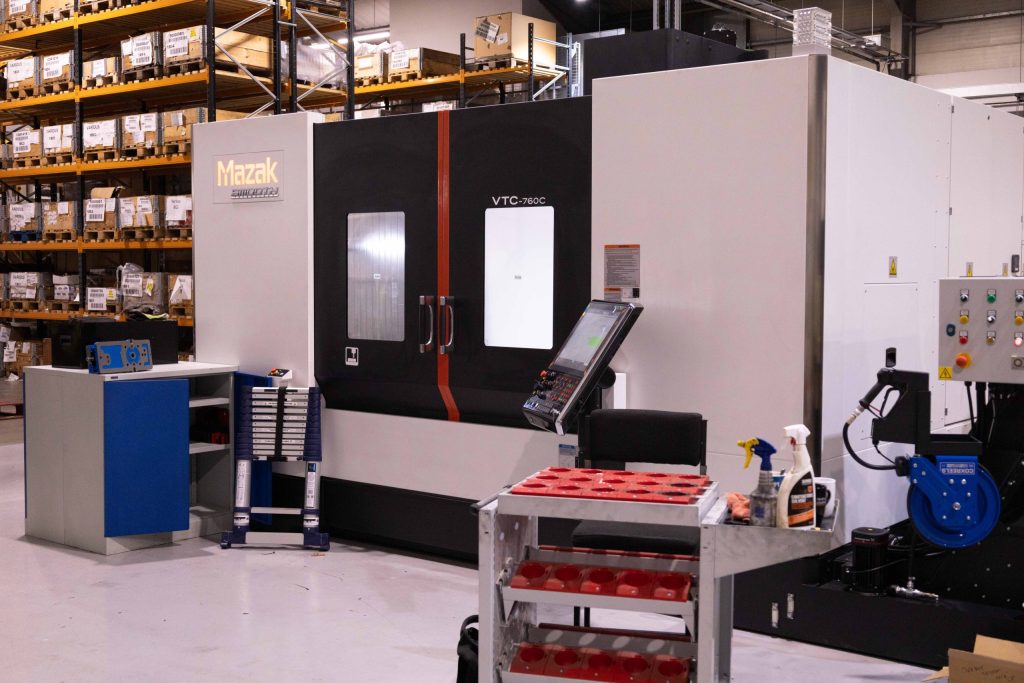
On 4 April 2025, The Rt Hon James Cleverly, TD VR MP, formally opened the new Gatic manufacturing and assembly facility in Halstead, Essex, marking the historic transfer of Gatic operations to the Alumasc Group’s Halstead site.
James Cleverly described the move as “a major milestone for UK manufacturing, innovation and growth.”